1877
The Talisman entrusted
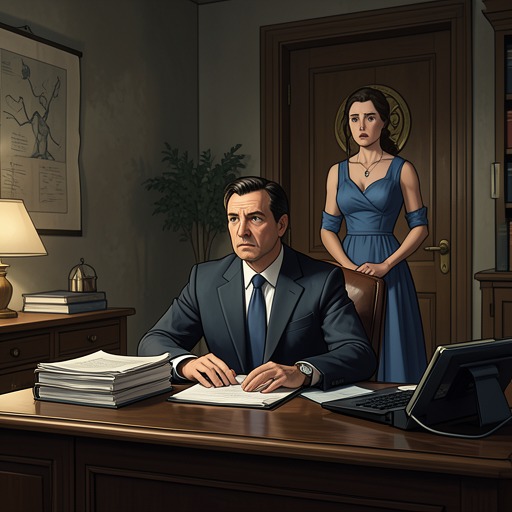
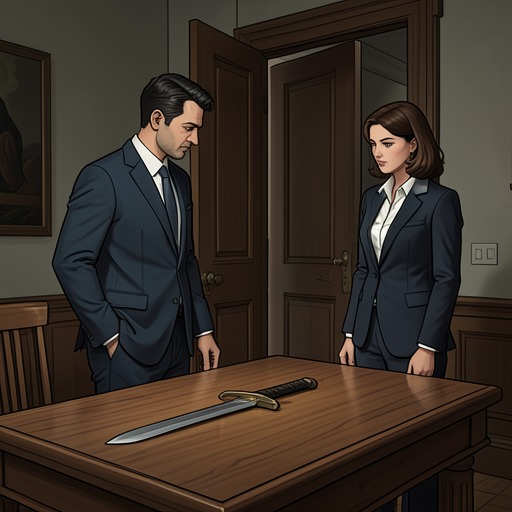
[John Wells](entity:character-recall-character-john-wells-908a3f829357) secretly entrusted a small and powerful talisman to his young clerks, [Arthur Tanner](entity:character-recall-character-arthur-tanner-1a77ba702007) and [Philip Catherwood](entity:character-recall-character-philip-catherwood-e9e02d9b37ef). He believed his nephew [Humphrey Wells](entity:character-recall-character-humphrey-wells-b10b2c6f9215) was plotting against him and wanted the object kept safe in case he needed rescuing.
1877, several weeks after the talisman was entrusted
The clerks imprisoned
[Humphrey Wells](entity:character-recall-character-humphrey-wells-b10b2c6f9215) demanded the talisman from [Arthur Tanner](entity:character-recall-character-arthur-tanner-1a77ba702007) and [Philip Catherwood](entity:character-recall-character-philip-catherwood-e9e02d9b37ef). When they refused, he later used the portable door to strand them in a room without an exit, where they remained isolated from ordinary time for more than a century.
Early in the story, before Paul begins work
Paul meets Sophie
At interviews for a junior clerk position, [Paul Carpenter](entity:character-recall-character-paul-carpenter-288051783ddc) and [Sophie Pettingell](entity:character-recall-character-sophie-pettingell-782445ab6eef) waited together and traded awkward conversation. Paul was drawn to Sophie despite her hostile manner, while she seemed to see through his attempts to hide what he was thinking.
The day Paul and Sophie meet
The bizarre interview
Paul faced a panel of unnerving partners who asked wildly irrelevant questions about everything from Zambia to the Tower of [London](entity:location-recall-location-london-420923d4a60a). He answered candidly and badly, leaving convinced that he had no chance of getting the job.
The night after the interview
The job offer
Paul received an offer from [J.W. Wells & Co.](entity:organization-recall-organization-j-w-wells-co-0c0e1bd503fb) despite his disastrous interview. He accepted the junior clerk position, not knowing what the company did or why its partners had chosen him.
Paul’s first day at work
Lost in the office
A receptionist sent Paul through the maze-like headquarters to meet [Dennis Tanner](entity:character-recall-character-dennis-tanner-6b0003f1961d), and Paul became spectacularly lost among impossible corridors, dead ends and unexpected rooms. [Casimir Suslowicz](entity:character-recall-character-casimir-suslowicz-ffbcc2c08909) eventually found him and escorted him to Dennis Tanner.
Paul’s first morning at work
A contract and a warning
[Dennis Tanner](entity:character-recall-character-dennis-tanner-6b0003f1961d) had Paul sign a lengthy contract without reading it, then described the clerical tasks he would perform. Christine hurriedly introduced him to office procedures, including the warning that [Sophie Pettingell](entity:character-recall-character-sophie-pettingell-782445ab6eef) was the other new clerk.
Paul’s first day, shortly after meeting Dennis Tanner
Reunited at the desk
Paul found Sophie waiting in their cramped shared office. Their reunion was stiff and uncomfortable, but each learned that the other had also been hired without an explanation of the company’s business.
Paul and Sophie’s first weeks
The endless printouts
[Julie](entity:character-recall-character-julie-5a82eb7a07d7) assigned the new clerks piles of computer printouts to sort by date, then supplied more whenever they neared the end. Paul finished quickly and offered to help, but Sophie refused assistance and interpreted his efforts as condescension.
Paul’s first day, lunchtime
Rick buys Paul lunch
[Dietrich Wurmtoter](entity:character-recall-character-dietrich-wurmtoter-a5d550615acc) invited Paul to an Uzbek restaurant and paid for his meal. He spoke at length about his own travels and hinted that the firm had much more to offer than tedious paperwork, but Paul still did not learn its purpose.
Paul’s first day, afternoon
The map and the jealousy
[Casimir Suslowicz](entity:character-recall-character-casimir-suslowicz-ffbcc2c08909) sent Paul a beautifully drawn map of the labyrinthine building. Sophie reacted with resentment when she saw the attention Paul was receiving, and Paul realized how much he wanted her approval.
About three weeks after Paul starts work
Neville’s advice
Paul told [Neville](entity:character-recall-character-neville-68d9c9a0985c) that his new job involved meaningless paperwork and that the firm seemed deeply strange. Neville guessed that Paul stayed because he liked Sophie and urged him to tell her, but Paul feared rejection and losing the job.
The Saturday after Paul speaks with Neville
The opera flyer
A Gilbert and Sullivan book unexpectedly replaced the model-railway book Paul thought he had borrowed. Later, on a wet walk through [Highgate Village](entity:location-recall-location-highgate-village-cc9652f80896), he found a flyer for The Sorcerer and took the coincidence as an unsettling nudge toward the performance.
The evening Paul finds the flyer
Sophie ends her relationship
Sophie had travelled to [Highgate Community Arts Centre](entity:location-recall-location-highgate-community-a-04856c7ef71b) to see her boyfriend perform, but she broke up with him backstage. She said that they had stopped being themselves around each other and that their relationship had become pointless.
The same evening as Sophie’s breakup
The Highgate reunion
Paul encountered Sophie outside the performance and invited her for a drink. She told him that her boyfriend had changed after becoming absorbed in Gilbert and Sullivan, and Paul listened as she explained why their relationship had failed.
Later that evening
A tentative connection
Over drinks, Paul and Sophie found a brief warmth in their shared dislike of [Dennis Tanner](entity:character-recall-character-dennis-tanner-6b0003f1961d) and their awkwardness about relationships. Sophie said she would see Paul on Monday, a small gesture that mattered enormously to him.
That night, after Paul returns home
The first sword arrives
Paul found his bedsit ransacked and a huge stone bearing a sword in the middle of the room. The inscription declared that whoever drew it would be rightful king of England, turning his ordinary home into the site of an impossible legend.
Sunday morning
Paul tests the sword
After reading the inscription, Paul tried to pull the sword free, but it would not move. He tried to explain the object away as a prop or an elaborate prank, yet its presence remained impossible to ignore.
Monday morning, before work
Sophie has a sword too
Paul arrived early and saw signs of a disturbance at the office, including a claw mark where a coat hook had been. When Sophie arrived, he told her about the sword in his room; she revealed that a similar sword had been delivered to her parents’ patio.
Monday, later that morning
Bauxite photographs
[Julie](entity:character-recall-character-julie-5a82eb7a07d7) gave the pair aerial photographs and told them to mark possible bauxite deposits, though she could not explain what bauxite looked like. Paul began to feel a strange tingling when he touched a particular place on one image.
Monday, late morning
A strange computer
Sophie tried to look up bauxite on a computer in reception, but found the unfamiliar system responded to her thoughts rather than ordinary input. She also stumbled across a document written in what she recognized as Elvish script.
Monday, before lunch
The bauxite game
Rather than continue the tedious assignment, Paul and Sophie invented a game called Find the Bauxite using photographs and tracing-paper grids. Sophie guessed Paul’s hidden locations repeatedly, while Paul felt a small shock whenever she named a correct square.
Monday, lunchtime
Lunch together
Sophie agreed to leave the office with Paul, bought him a ham roll and coffee, and shared her uncertainty about what to do with her life. Their conversation softened the hostility between them and made their growing connection feel more real.
Monday afternoon
The office turns uncanny
After the pair returned from lunch, they noticed that the damaged coat hook had been replaced and the claw mark had vanished without any sign of repair work. The office’s strange incidents seemed less like random mischief and more like evidence of an unseen world.
The next workday
A spell in the strongroom
Paul and Sophie were assigned to inventory the firm’s underground strongroom. They found an old red ledger that catalogued many of its contents and began identifying an extraordinary collection of documents and objects.
During the inventory
The strongroom’s strange contents
The clerks catalogued treasure maps, a chemical sample attributed to Dr Jekyll, a supposed Proust manuscript and other objects that seemed drawn from stories and history. One old photograph showed a man who looked exactly like [Theodorus Van Spee](entity:character-recall-character-theodorus-van-spee-9119729300a3), though Sophie insisted it must depict an ancestor.
During the strongroom inventory
Records bearing Paul’s name
Paul discovered a bundle of love letters, financial records and a death certificate apparently bearing his name. The letters seemed to describe Sophie’s feelings, while the certificate listed decapitation; once outside the strongroom, however, the letters were addressed to [Philip Catherwood](entity:character-recall-character-philip-catherwood-e9e02d9b37ef).
Near the end of the strongroom assignment
Sophie tells Paul about Shaz
Sophie told Paul that she had met [Shaz](entity:character-recall-character-shaz-e56465d57137) at a party and thought she might be falling for him. Paul concealed his disappointment and encouraged her, even as the news seemed to close off the future he had privately imagined with her.
A Friday evening, shortly before six
Locked inside the office
Paul and Sophie realized that the building had been locked with them inside. Searching [Dennis Tanner](entity:character-recall-character-dennis-tanner-6b0003f1961d)’s office, they found it in disarray, just as footsteps approached in the corridor.
The same Friday evening
Goblins seize Sophie
Several armed [Goblins](entity:creature-recall-creature-goblins-d72621d6a4b5) rushed into the office and confronted Paul. He frightened most of them off, but one grabbed Sophie and dragged her away at knifepoint.
Moments after Sophie is seized
Paul fights with a stapler
Paul pursued the [Goblins](entity:creature-recall-creature-goblins-d72621d6a4b5) through the building, wielding a spear and then the long stapler as a weapon. He managed to stop one attacker, but [Dennis Tanner](entity:character-recall-character-dennis-tanner-6b0003f1961d) arrived and scolded Paul for attacking his own family.
That Friday evening, after the attack
The firm’s true business
[Dennis Tanner](entity:character-recall-character-dennis-tanner-6b0003f1961d) revealed that [J.W. Wells & Co.](entity:organization-recall-organization-j-w-wells-co-0c0e1bd503fb) was a supernatural consultancy employing sorcerers, a giant, a witch-queen and a Goblin. He explained that the [Goblins](entity:creature-recall-creature-goblins-d72621d6a4b5) owned the building and were allowed to roam it after the doors were locked.
That Friday evening
The trainees’ abilities revealed
[Dennis Tanner](entity:character-recall-character-dennis-tanner-6b0003f1961d) explained that Paul had been hired for his instinctive ability to locate bauxite and that Sophie had the makings of a seer. Sophie rejected the idea of becoming a witch, but Dennis warned that their contracts could compel them to stay.
Later that Friday night
Paul uses magic on a policeman
After leaving the office, Paul drank too much and was arrested. Believing himself to be a wizard, he successfully used a spell to make a policeman bite his own truncheon, providing his first unmistakable proof that he could work magic.
The weekend after Goblin Night
Magic as a practical force
At home, Paul found that a forceful spell could make a kettle boil and restore spoiled milk. He concluded that magic did not remake reality at will so much as prod it into doing what it was meant to do.
The following Monday morning
Rosie’s vision
[Rosie](entity:character-recall-character-rosie-b6d2214cda6c), the Goblin mother of [Dennis Tanner](entity:character-recall-character-dennis-tanner-6b0003f1961d), appeared in a receptionist’s human form and spoke privately with Paul. She used her seer stone to show him Sophie with [Shaz](entity:character-recall-character-shaz-e56465d57137), deepening his heartbreak while hinting that hidden actors were manipulating events around him.
That Monday, during lunch
The portable door discovered
Paul found a rolled rubber object and its instructions in his desk drawer. Following the directions, he attached it to a wall, opened it and stepped through, discovering that the [J.W. Wells portable door](entity:object-recall-object-j-w-wells-5e8b31dc2b68) could connect distant places.
That Monday, during the same lunch break
A first trip to Venice
The portable door delivered Paul to [Venice](entity:location-recall-location-519cfa9fe115), where he sampled coffee and pastry before returning through the opening. Almost no time had passed at the office, though he brought back a café matchbook as proof that the journey had been real.
The weeks after Paul discovers the door
The door’s limits
Paul used the door for brief visits to places around the world, enjoying meals and sightseeing without gaining weight or keeping the foreign cash he withdrew. He gradually tired of these empty excursions and recognized that the door offered escape without meaningful connection.
During Paul’s travels, after the first weeks of using the door
Rosie appears in Ankara
[Rosie](entity:character-recall-character-rosie-b6d2214cda6c) approached Paul in [Ankara](entity:location-recall-location-5877982052c0) while disguised as a beautiful young woman and admitted she had followed him through the door. She flirted with him, mocked his devotion to Sophie and warned him that dangerous events were unfolding at the firm.
Later, during a workday after the Ankara encounter
The real Sophie and Shaz
Paul continued to distance himself from Sophie and stopped telling her about his discoveries. Their growing silence left both of them isolated, while Paul tried to persuade himself that his brief adventures through the door could replace the relationship he wanted.
Several weeks after Paul joins the firm
Mortensen Counters explained
[Dietrich Wurmtoter](entity:character-recall-character-dietrich-wurmtoter-a5d550615acc) explained that the printouts came from Mortensen Counters, which monitored supernatural activity around the world. He also warned the trainees about magical hazards and issued them protective rings and emergency badges.
The next day
A dangerous client assignment
[Humphrey Wells](entity:character-recall-character-humphrey-wells-b10b2c6f9215) assigned Paul and Sophie to a client operation involving [JWW Valentine Express Love Philtre](entity:object-recall-object-jww-valentine-express-09f7573020c9). The liquid could make its drinker permanently love the first person of the opposite sex encountered, and the assignment required covertly administering it.
Shortly after the assignment is given
Vox briefs the clerks
A small goblin named Vox emerged from the file and delivered the instructions for the operation. Paul and Sophie were to travel to [Cudsey](entity:location-recall-location-53349bd5709e) and arrange for the philtre to be served to the firm’s target.
At Cudsey, before the operation
The Clent scheme
Vox explained that the target was film star [Ashford Clent](entity:character-recall-character-ashford-clent-be2700246c9c) and the client hoped to marry him, divorce him and take a large settlement. Sophie was appalled by the plan, but the compulsory assignment and Vox’s surveillance left them little freedom to refuse.
That evening in Cudsey
The potion is administered
Sophie served [Ashford Clent](entity:character-recall-character-ashford-clent-be2700246c9c) a beer laced with the love philtre, and he promptly fell asleep. The client arrived as planned, leaving Paul and Sophie to carry out the scheme and confront the human consequences of their work.
Later that evening
Vox forces a pairing
Vox seized Paul and Sophie and tried to make them drink the remaining philtre, claiming it knew what was best for them. Before the coercion could take effect, [Dietrich Wurmtoter](entity:character-recall-character-dietrich-wurmtoter-a5d550615acc) intervened and trapped Vox in a hamburger box.
Minutes after Vox is contained
They redirect the scheme
Paul and Sophie found [Ashford Clent](entity:character-recall-character-ashford-clent-be2700246c9c) and his client together in a pub. Sophie devised a way to make the potion work as intended without forcing Clent into the original deceitful marriage: she arranged for the client herself to drink it and wake in love with him.
On the train journey back from Cudsey
Paul is enchanted by Rosie
[Rosie](entity:character-recall-character-rosie-b6d2214cda6c) disguised herself as a passenger, struck Sophie unconscious and used the love philtre to make Paul fall helplessly in love with her. Sophie was left beside them with a bag over her head as Rosie tried to claim Paul for herself.
Moments after Rosie enchants him
Paul flees through time
Paul used the portable door to escape the train and shouted for it to take him into the past. He entered darkness with [Rosie](entity:character-recall-character-rosie-b6d2214cda6c) pursuing him, hoping to reach a point before the potion had been administered.
Immediately after Paul escapes
Sophie follows and closes the door
Sophie followed Paul through the portable door, but she accidentally shut it behind her. The pair were stranded in darkness, unable to tell where or when they had arrived.
After Sophie closes the door
The doorless room revealed
The lights came on in the Victorian-looking room where Paul had been trapped in an earlier vision. There he and Sophie encountered [Philip Catherwood](entity:character-recall-character-philip-catherwood-e9e02d9b37ef) and [Arthur Tanner](entity:character-recall-character-arthur-tanner-1a77ba702007), who explained how [Humphrey Wells](entity:character-recall-character-humphrey-wells-b10b2c6f9215) had imprisoned them with the portable door in [1877](entity:time-recall-time-1877-3f3edf2c797f).
During the conversation in the doorless room
Sophie admits the tea plot
Sophie confessed that she had secretly put love philtre in Paul’s tea earlier, hoping to make him fall in love with her. Paul had mistaken the resulting enchantment for [Rosie](entity:character-recall-character-rosie-b6d2214cda6c)’s work, and the confession exposed how badly they had misunderstood each other.
Soon after Sophie’s confession
Arthur and Rosie reunite
[Rosie](entity:character-recall-character-rosie-b6d2214cda6c) woke in the room and recognized [Arthur Tanner](entity:character-recall-character-arthur-tanner-1a77ba702007), her lost Victorian lover and the father of [Dennis Tanner](entity:character-recall-character-dennis-tanner-6b0003f1961d). Their reunion explained the personal history behind the firm’s present-day conflicts and briefly gave the captives reason to hope for a way out.
During their first conversation after the reunion
Paul and Sophie kiss
Paul and Sophie finally admitted the truth behind their earlier actions and kissed. Their happiness was interrupted when [Rosie](entity:character-recall-character-rosie-b6d2214cda6c) explained that the prefect badges could return them to the office but would not free her, [Arthur](entity:character-recall-character-arthur-2e33b65bbe57) or [Philip Catherwood](entity:character-recall-character-philip-catherwood-e9e02d9b37ef).
Immediately after the reunion
The first rescue fails
Paul and Sophie used the badges to escape the doorless room and returned to the ordinary world, then recovered the portable door from a train at [Stafford railway station](entity:location-recall-location-2a6827b39d1c). They tried to bring the others through, but an invisible lock kept [Arthur](entity:character-recall-character-arthur-2e33b65bbe57), [Philip Catherwood](entity:character-recall-character-philip-catherwood-e9e02d9b37ef) and [Rosie](entity:character-recall-character-rosie-b6d2214cda6c) trapped.
Soon after the failed rescue
The sword keys discovered
[Rosie](entity:character-recall-character-rosie-b6d2214cda6c) explained that [Humphrey Wells](entity:character-recall-character-humphrey-wells-b10b2c6f9215) had locked the portable door with two hidden keys. Paul recognized that the swords in the stone at his and Sophie’s homes might conceal them, and the two of them drew the swords together to reveal the keys.
After the keys are recovered
The door opens again
Paul used both keys to unlock the portable door and return to the Victorian room with Sophie. The two rescued [Philip Catherwood](entity:character-recall-character-philip-catherwood-e9e02d9b37ef) and [Arthur Tanner](entity:character-recall-character-arthur-tanner-1a77ba702007), bringing them out of their long confinement, but the reunited group soon faced a new threat.
Immediately after the captives are freed
Humphrey’s ambush
[Humphrey Wells](entity:character-recall-character-humphrey-wells-b10b2c6f9215) transported the group to the boardroom and revealed that he had captured [Rosie](entity:character-recall-character-rosie-b6d2214cda6c) and was sawing her in half to force [Arthur](entity:character-recall-character-arthur-2e33b65bbe57) to surrender the talisman. He also threatened to imprison or transform the others once he had secured his prize.
During Humphrey’s attack
Arthur surrenders the talisman
[Arthur](entity:character-recall-character-arthur-2e33b65bbe57) gave Humphrey a golden chain to save [Rosie](entity:character-recall-character-rosie-b6d2214cda6c), only to discover that Humphrey had unknowingly carried the talisman for more than a century. Humphrey freed Rosie but immediately restrained the group again and prepared to punish them.
Moments after Arthur gives up the chain
Paul frees John Wellington
Paul saw [John Wells](entity:character-recall-character-john-wells-908a3f829357) in the reflection of the long stapler and followed his instruction to place the chain over it. John Wells emerged from the stapler, broke Humphrey’s spell and defeated him, transforming Humphrey into a photocopier.
About twenty minutes after Humphrey is defeated
Sophie wakes after the potion
Sophie woke after the potion took effect and learned that [John Wells](entity:character-recall-character-john-wells-908a3f829357) had stopped Humphrey from making her fall in love with [Philip Catherwood](entity:character-recall-character-philip-catherwood-e9e02d9b37ef). Paul said an antidote required him to swear off women, but Sophie insisted that her love for him had existed before any potion.
Later that day
The partners are questioned
[John Wells](entity:character-recall-character-john-wells-908a3f829357) questioned the partners about whether any had assisted Humphrey, using Paul and Sophie’s ability to hear true intent after eating dragon-dropping beans. The inquiry implicated [Dennis Tanner](entity:character-recall-character-dennis-tanner-6b0003f1961d) in hostile thoughts against John, even though Dennis denied having participated in the original plot.
After the partners’ investigation
Tanner reveals the match
[John Wells](entity:character-recall-character-john-wells-908a3f829357) explained that [Dennis Tanner](entity:character-recall-character-dennis-tanner-6b0003f1961d) had insisted Paul and Sophie be hired and had arranged the swords and the circumstances that brought them together. Dennis admitted he had acted partly to keep Paul away from [Rosie](entity:character-recall-character-rosie-b6d2214cda6c), while claiming the pair were naturally suited to the work.
That evening, after the confrontation
The Gilbert and Sullivan clue
Paul asked [Dennis Tanner](entity:character-recall-character-dennis-tanner-6b0003f1961d) why Gilbert and Sullivan had seemed to guide him toward Sophie. Dennis pointed him to a song in The Sorcerer, whose lyrics named [John Wellington Wells](entity:character-recall-character-john-wellington-wel-27d4d7aff013) and 70 St Mary Axe, tying the apparent coincidence to the firm’s supernatural history.
Later that evening, at Paul’s home
Rosie’s final provocation
[Rosie](entity:character-recall-character-rosie-b6d2214cda6c) visited Paul in Sophie’s appearance, hoping to fool him into believing that Sophie had come to him. He recognized the disguise and refused to look into her crystal ball, choosing to trust Sophie rather than seek supernatural certainty about their future.
Several days later
George exposed by foil
Sophie explained that [Shaz](entity:character-recall-character-shaz-e56465d57137) had been an impostor named George, a Goblin who was exposed when reflective foil was placed above his bed. She had struck him with a saucepan, and he confessed that [Rosie](entity:character-recall-character-rosie-b6d2214cda6c) had arranged the deception to keep Paul and Sophie apart.
The following Saturday
The final unanswered question
Paul asked Sophie whether she had accidentally drunk some of the love philtre before dosing his tea. She warned him that he might regret asking, but he insisted on knowing; after she answered, he recognized that his own curiosity had once again made him his worst enemy.
At the novel’s ending
The door’s next possibility
Sophie pointed out that Paul might wish to travel back to the instant before asking his question and use magic to forget it. Paul took the cardboard tube containing the portable door from his coat, leaving their next move unresolved.